







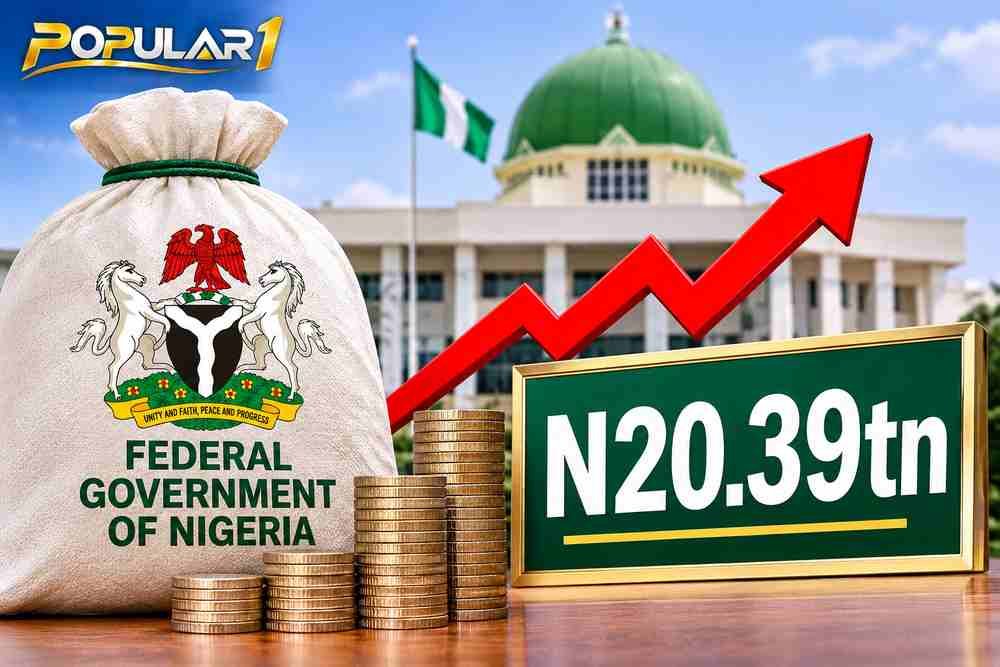
Nigeria’s Federal Government (FG) had borrowed N20.39 trillion from domestic sources by September 30, 2026, exceeding its full–year target of N18.4 trillion by about 11%, according to the Financial Markets Dealers Association (FMDA).
The figure represents a sharp increase from N10.74 trillion recorded at the end of June, meaning FG added approximately N9.65 trillion in net domestic borrowing during the third quarter.
Treasury bill allotments rose by 33% to N8.14 trillion, with 364-day bills accounting for N7.08 trillion. Federal Government bond sales also increased by 44% to N4.14 trillion.
The domestic borrowing target forms part of the N29.2 trillion new borrowing provision in the 2026 budget, which also includes N10.79 trillion in planned external financing.
FG credit increased by 63.1% year-on-year to N39.40 trillion in September, compared with 15.7% growth in private-sector credit to N83.93 trillion. The report also noted that private-sector credit declined by N537.6 billion during the month.
Meanwhile, the Central Bank of Nigeria reduced the Monetary Policy Rate by 350 basis points to 23% in September, but lending costs remained high. The Manufacturers Association of Nigeria estimated that prime lending rates could still range between 27% and 30%.
The Debt Management Office scheduled N5.75 trillion in Federal Government bond offers for the fourth quarter, while N5.43 trillion in Treasury bills were due to mature.
Nigeria’s public debt stood at N166.79 trillion as of June 30, 2026, including N91.59 trillion in domestic debt.
The borrowing trend raises concerns about rising debt-servicing obligations and competition for funds, as government securities continue to offer attractive returns to investors.
Details of government debt issuance and borrowing plans are available through the Debt Management Office.


