



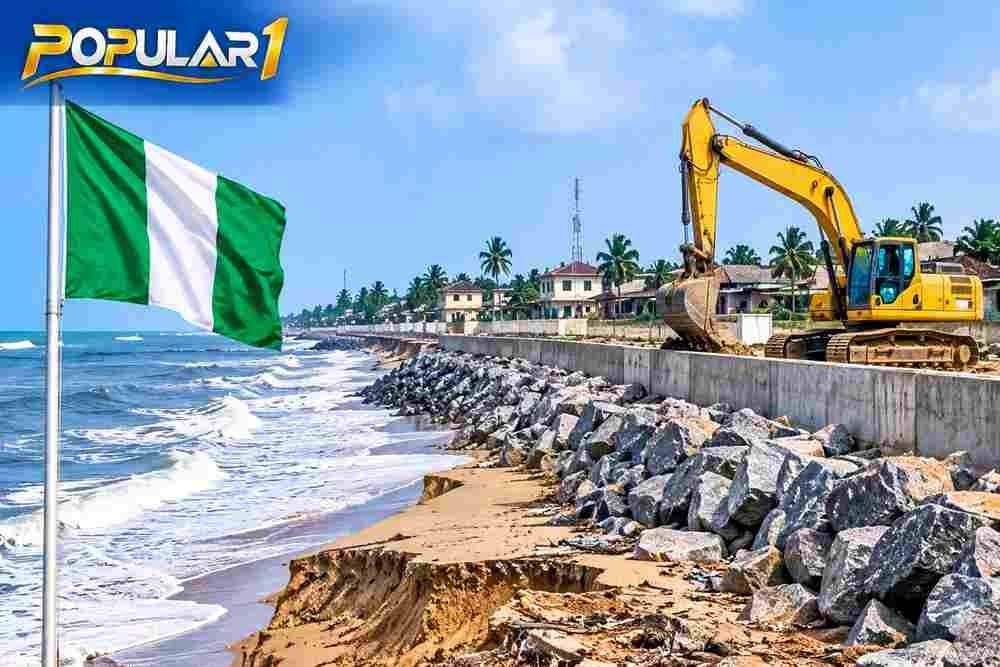
Coastal erosion and rising sea levels are putting fishing businesses, jobs and investments at risk across Nigeria, particularly in Lagos and Ondo, as communities struggle with declining incomes and mounting operating costs.
Some of the negative effect of coastal erosion in Akodo-Ise, Lagos, are the fishermen who face higher fuel expenses as they travel farther to find fish. One fisherman said his monthly income had fallen from between N300,000 and N500,000 to below N100,000, while another reported losing three boats worth between N2.5m and N3m each.
The economic threat extends to fish processors and traders, who face disrupted supplies, higher transportation costs and reduced profits. The coastal erosion has caused damage to coastal infrastructure and marine ecosystems also threatens fisheries, tourism and other businesses that depend on the ocean.
Nigeria estimates it needs $336.5bn between 2026 and 2035 to meet its climate commitments, including $141.5bn for adaptation. Proposed measures include restoring 13,000 hectares of mangroves, protecting marine habitats and supporting climate-resilient fisheries.
The National Council on Climate Change says Nigeria wants climate investment to support businesses, create jobs and strengthen vulnerable communities. However, experts stress that funding must translate into properly assessed projects and practical support for affected businesses and livelihoods.
More information on Nigeria’s climate investment priorities is available through the National Council on Climate Change.