






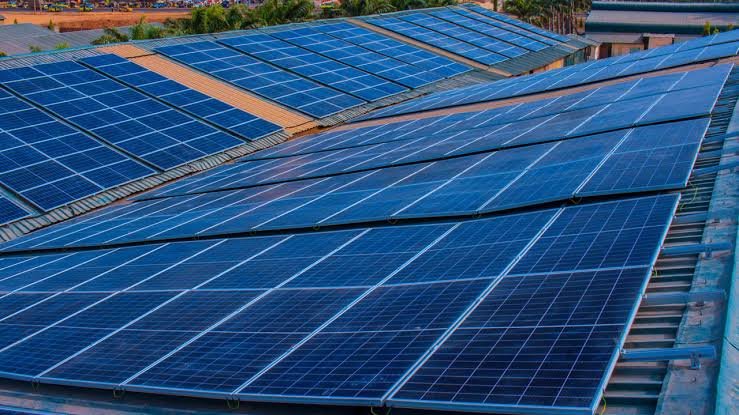
Experts say Nigeria could become a major solar manufacturing and distribution hub for West Africa, with the region’s electricity deficit, mineral resources and rising demand for alternative energy creating investment opportunities worth billions of dollars.
The proposal was discussed at an event titled “Just Transition: Unlocking Nigeria’s Solar Opportunities” at the Nigerian Pavilion during COP31 in Türkiye. Speakers urged Nigeria to move beyond importing solar panels and invest in local manufacturing, mineral processing, battery production and assembly facilities.
Michael David, Executive Director of the Global Initiative for Food Security and Ecosystem Preservation, said Nigeria has mineral resources that could support solar panel and battery production. He identified silica, lithium, copper, aluminium, graphite, manganese, nickel, cobalt, tin, zinc and silver among the relevant minerals.
He said Nigeria imported approximately 2.9 million solar panels last year, spending more than ₦450 billion, despite having some of the minerals needed for local production. He argued that developing domestic manufacturing would reduce import dependence, create jobs and allow Nigerian businesses to serve neighbouring markets.
David also pointed to West Africa’s electricity access deficit, estimating that about 185 million people in the region lacked access to electricity in 2023. He said this represented a significant potential market for Nigerian solar manufacturers and distributors.
The International Finance Corporation (IFC) estimates that Nigeria’s solar power sector could attract up to $8.5 billion in investment by 2030 and create as many as 365,000 jobs if the right policy conditions are established. Its Nigeria Country Private Sector Diagnostic identifies solar energy as a major investment opportunity. IFC+1
Senior Special Assistant to the President on Climate Technologies, Olamide Fagbuji, said the government was working to create policies that would encourage private investment in renewable energy. He cited the Electricity Act, which allows states to participate in electricity generation and distribution, as an important step towards expanding power supply.
However, Executive Director of Bridge That Gap Initiative, Gloria Bulus, identified affordability as a major obstacle to wider solar adoption, explaining that the upfront cost of panels, batteries and installation remains difficult for many low-income households.


