

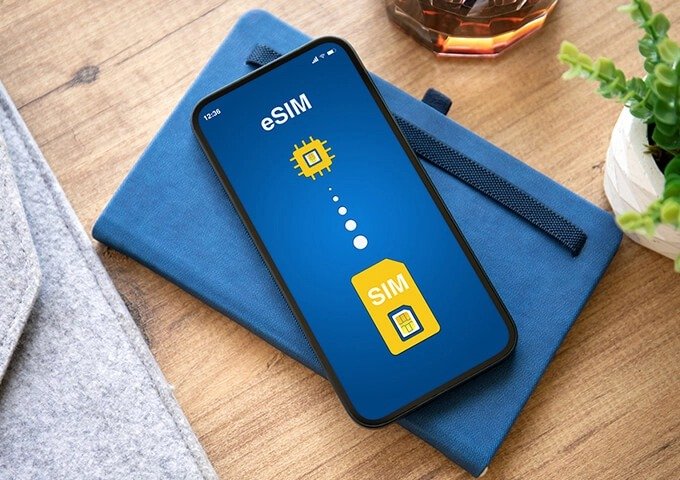
Switching to an eSIM can make managing your mobile service easier, especially when travelling or using multiple numbers. But while ditching the physical SIM card has its perks, the digital alternative isn’t without its frustrations.

What Makes eSIM Different From a Physical SIM?
Despite their different designs, eSIMs and traditional SIM cards do essentially the same job: they connect your phone to your mobile network. Neither format automatically delivers better signal strength, faster internet, or superior call quality. Your experience depends largely on your carrier, device, network coverage, and plan.
The real difference lies in how your service is activated and transferred. A physical SIM is a removable card you insert into your phone, while an eSIM is built into the device and activated by downloading a carrier profile.
That digital approach brings some welcome advantages.
Why eSIM Could Be the Smarter Choice
Switch networks without swapping cards. With a compatible phone and supported carrier, you can activate a mobile plan through your device settings, a carrier app, or a QR code. There’s no need to open a SIM tray, handle a tiny card, or wait for a replacement to arrive.
Manage multiple numbers with less hassle. Many eSIM-compatible phones let you store several carrier profiles, although the number you can use simultaneously depends on the device. This makes it easier to manage personal and business lines or keep a second number for specific purposes.
Stay connected while travelling. International travellers can purchase a travel eSIM before leaving home and activate it when they arrive. That means less time hunting for a local SIM vendor and potentially lower costs than paying traditional roaming rates. Some plans can also remain stored on your device for future trips.
However, an eSIM isn’t automatically the cheapest option. If your regular carrier already includes affordable international roaming, buying a separate travel plan may offer little benefit.
Skip the physical-card wait. Depending on the provider, you can activate a new line digitally instead of waiting for a SIM card to be delivered. Removing the need for a physical SIM tray may also give phone manufacturers more flexibility when designing internal components, although the benefits vary by device.
The Downsides of Using an eSIM
For all its convenience, eSIM technology has a few limitations worth considering.
Not every phone or carrier supports it. Compatibility depends on your specific device model, regional version, and mobile provider. Before buying a plan, check that your phone supports eSIM and that your carrier can activate the service you want.
Your phone’s network-lock status matters, too. An eSIM won’t magically let you use another carrier if your device is locked to your existing provider.
Switching phones isn’t always straightforward. Moving a physical SIM to another compatible phone can take seconds. Transferring an eSIM may be just as simple with supported devices, but some carriers require an app, a new QR code, or assistance from customer support.
Apple offers eSIM Quick Transfer on supported devices and carriers, while certain iPhone and Android combinations also support direct transfers. Still, the process isn’t universal, so check the requirements before upgrading your phone.
Travel plans can come with hidden costs. A travel eSIM can provide affordable mobile data abroad, but it doesn’t necessarily replace your regular phone line. Depending on your setup, calls and texts on your usual number may still trigger roaming charges.
Before travelling, check your carrier’s terms, confirm which line handles mobile data, and understand whether incoming calls or text messages incur additional fees. You can disable your regular line to avoid certain roaming charges, but doing so may prevent you from receiving calls and texts on that number while it’s switched off.
Why Some People Still Prefer Physical SIM Cards
For many users, the biggest advantage of a traditional SIM is its simplicity. Take the card out of one compatible phone, insert it into another, and you’re often ready to go.
With an eSIM, the same process may involve digital settings, activation codes, carrier restrictions, or a call to customer support. When transfers work smoothly, the difference may be negligible. When they don’t, a removable SIM can be much less frustrating.
Physical SIM cards also remain useful for older phones and devices that don’t support eSIM. They’re a practical choice for people who regularly switch handsets, keep backup phones, or simply prefer having direct control over their mobile connection.
There are security considerations with both formats, too. An eSIM eliminates the risk of someone physically removing your SIM card, but it doesn’t make your mobile account immune to fraud, unauthorised transfers, or SIM-swap attacks. Protecting your carrier account remains important regardless of which format you use.
So, Should You Choose eSIM or a Physical SIM?
It comes down to how you use your phone.
If you travel frequently, juggle multiple numbers, or prefer activating mobile plans digitally, an eSIM could be the more convenient option. If you regularly move your SIM between devices or rely on older phones, a physical card may still be the better fit.
You don’t necessarily have to choose one over the other, either. Many compatible smartphones support a physical SIM and an eSIM together, allowing you to keep your existing number while adding another line.
The bottom line: eSIM is a useful step forward, but it isn’t an automatic upgrade for everyone. Check your phone’s compatibility, your carrier’s transfer process, and the cost of your plan before making the switch. The best option is the one that fits your needs, not simply the newest technology.

1 Comment
I prefer the e-sim….it ideally fits into the latest technology