
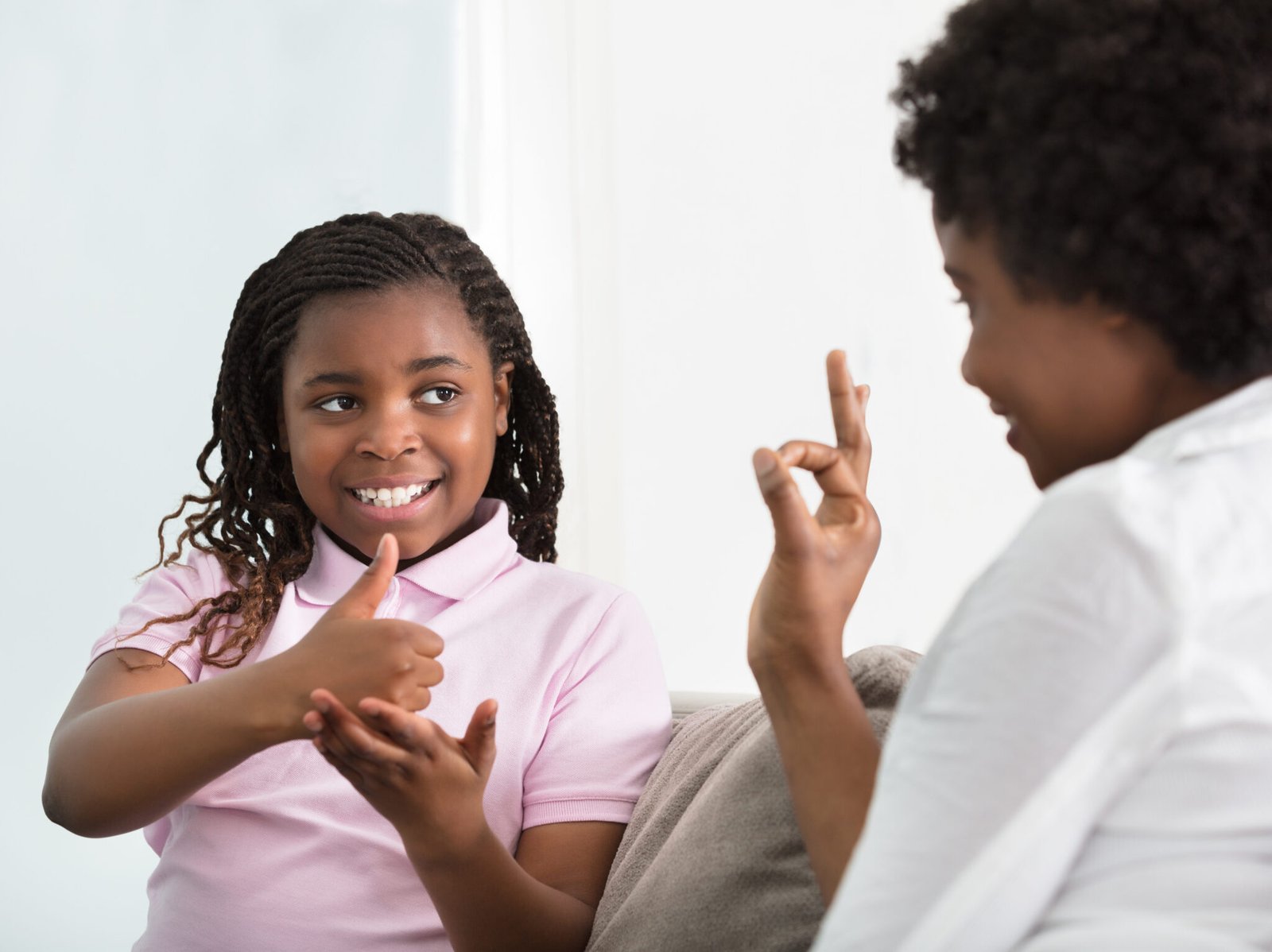
For many deaf children, communicating with their hearing parents remains a daily struggle. Now, a Nigerian tech founder believes AI could help change that.
Confidence Ugolo, founder of Thatsign and CEO of Techies Africa, is developing an AI-powered tool that translates speech into sign language and converts signing back into text or speech.
The idea came from personal experience. Ugolo and his deaf neighbour once relied on notepads to communicate, even when sitting beside each other. That experience inspired him to begin developing Thatsign around 2024.
The need is significant. According to the UK’s National Deaf Children’s Society, more than nine in 10 deaf children are born to hearing parents. Research suggests the figure exceeds 95% in Nigeria.
Thatsign aims to make everyday communication easier by allowing parents to speak and have their words translated into sign language, while deaf children can sign back and have their responses converted into speech or text.
However, the technology is still under development. Its current prototype supports British Sign Language (BSL), with American Sign Language (ASL) and Nigerian Sign Language (NSL) planned for the future. The startup expects to launch around mid-2027.
But getting the technology right remains a major challenge.
Early feedback from deaf reviewers highlighted missing facial expressions, incorrect signing sequences, unclear finger positioning and poor video quality. These details matter because sign language involves facial expressions and body movements, not just hand gestures.
Ugolo says the prototype currently recognises 13 everyday signs from more than 300 in-house videos. The team is also working to improve its ability to recognise signing from different people.
One independent reviewer, deaf teacher Jephthah Adeleke, rated the prototype 9 out of 10, describing it as user-friendly.
Thatsign plans to make money through family subscriptions, partnerships with councils and charities, and business subscriptions. Its basic family plan is expected to be free.
The startup also faces competition from companies such as Signapse and Google’s sign-language technology. However, Ugolo believes its two-way translation feature could give it an advantage.
Ultimately, Thatsign’s biggest challenge is not simply building an AI translator but creating one the Deaf community can trust. Whether it succeeds will depend on translation accuracy, continuous feedback and meaningful involvement of deaf users.
